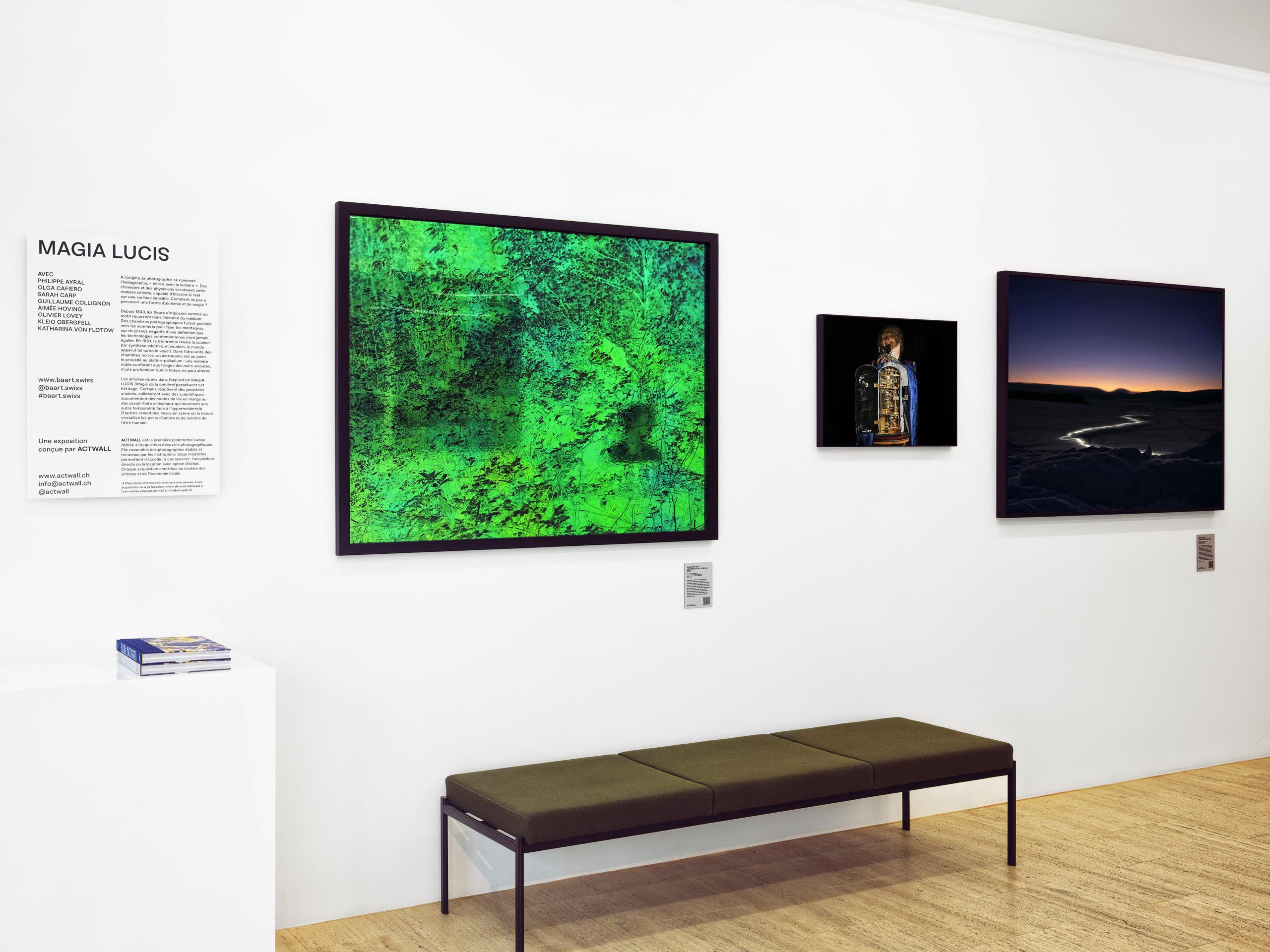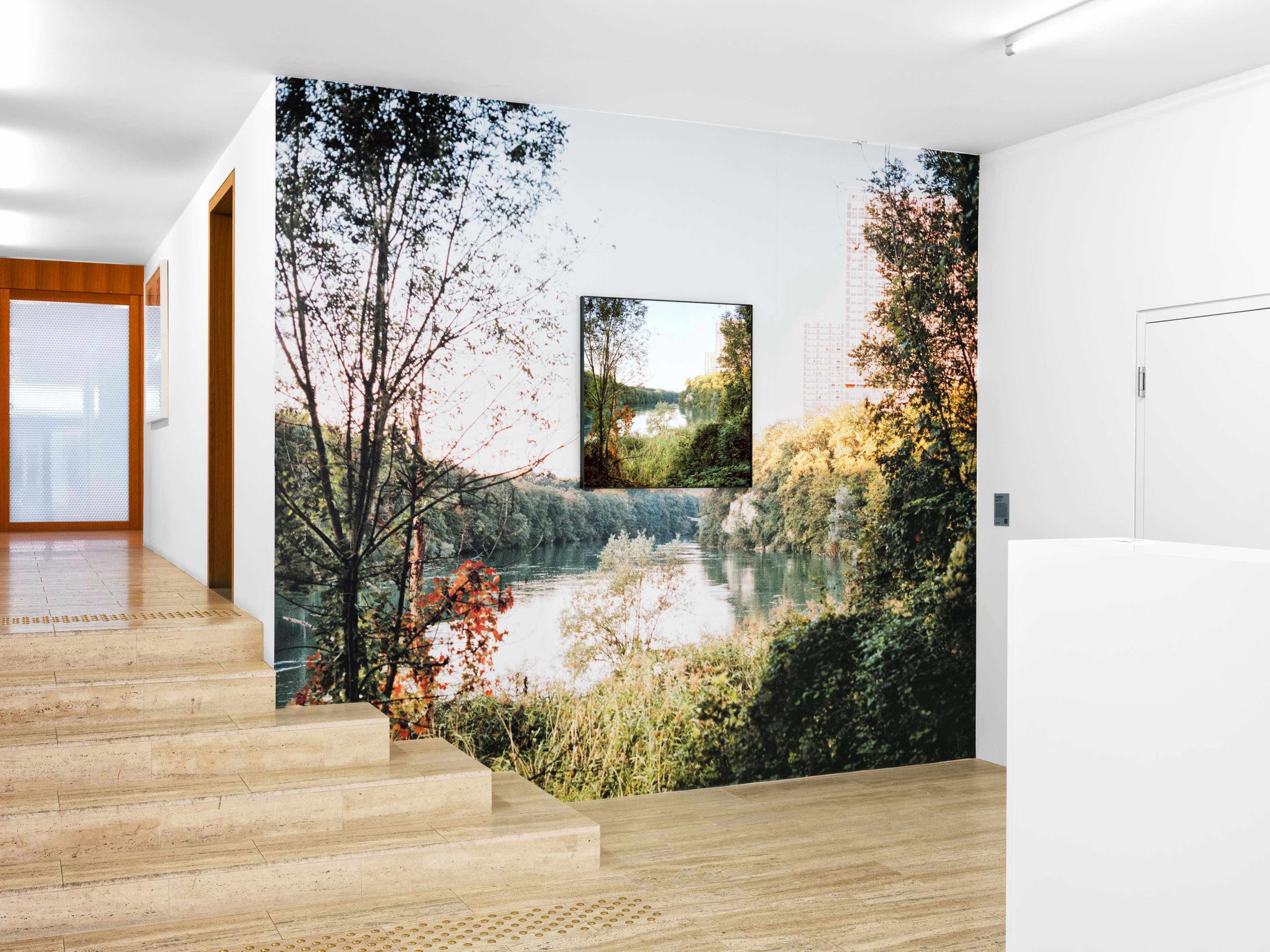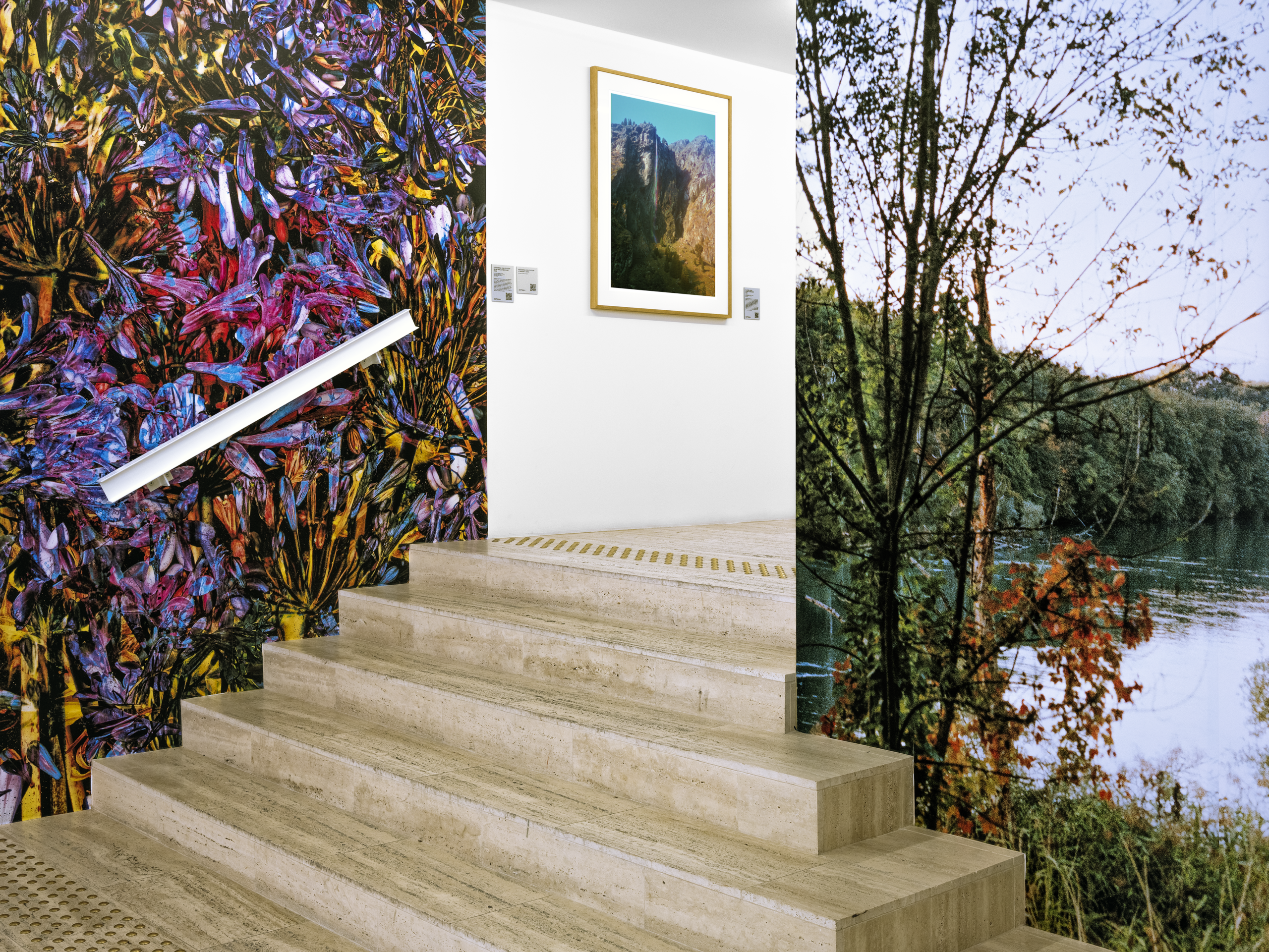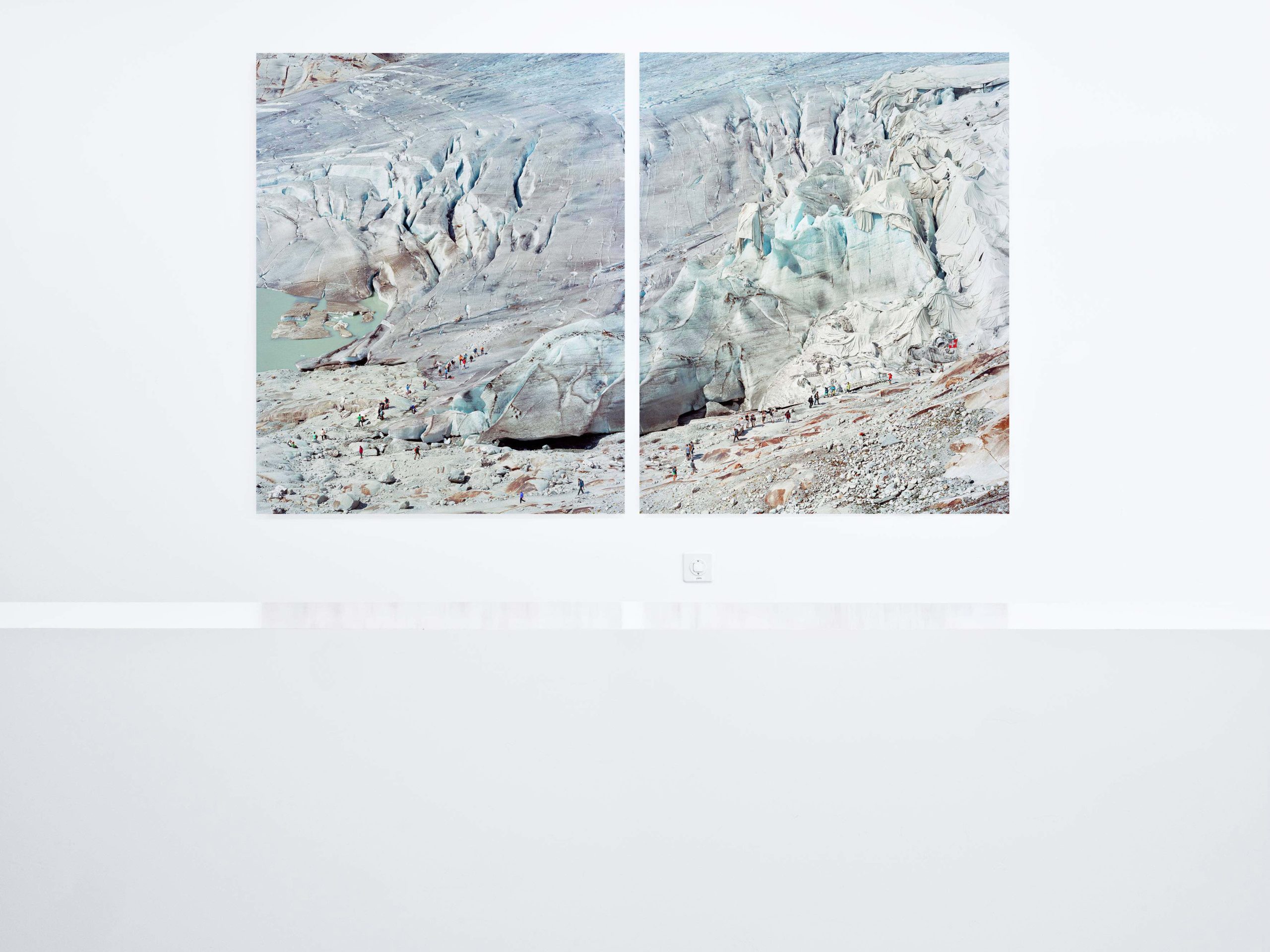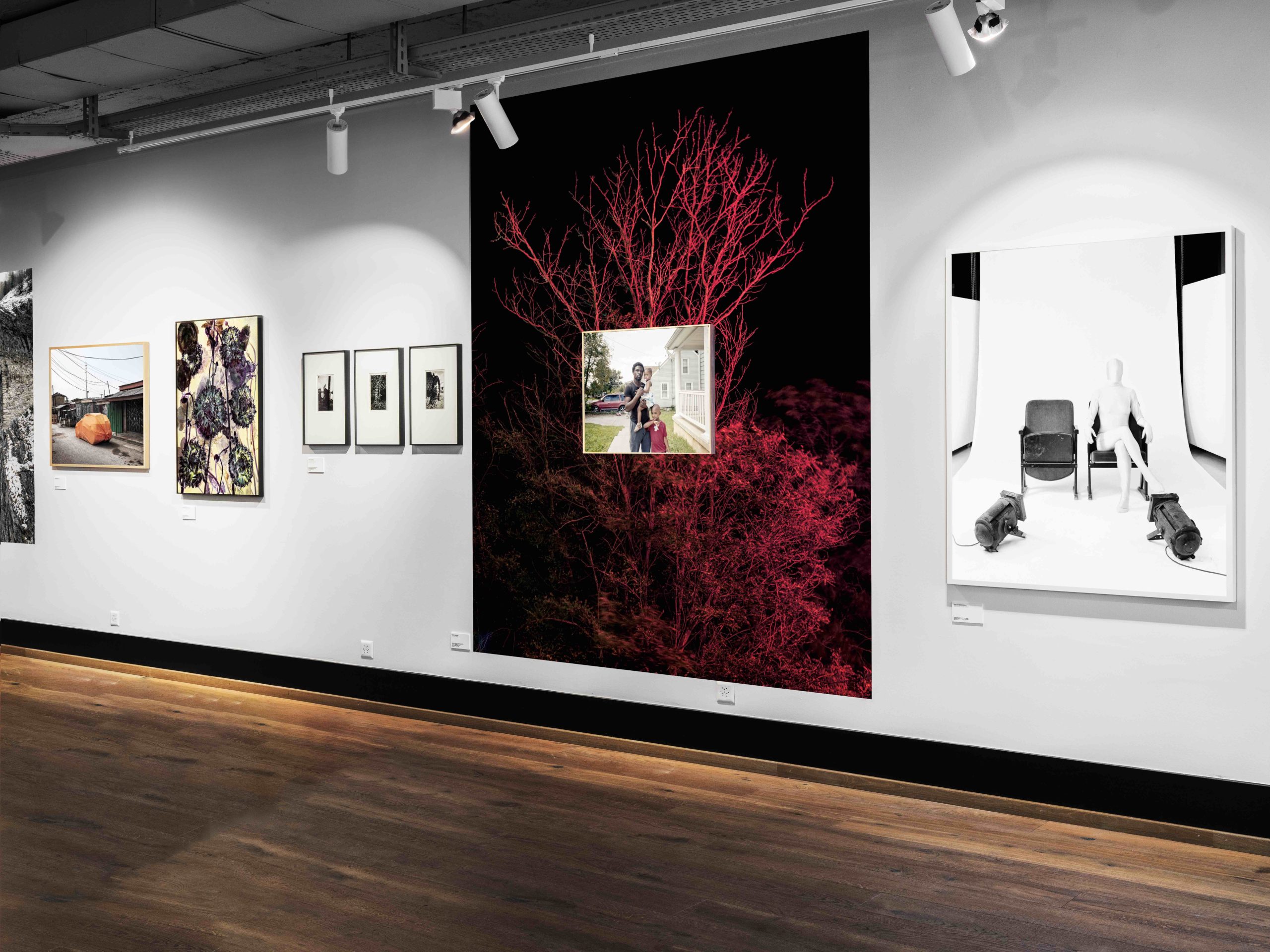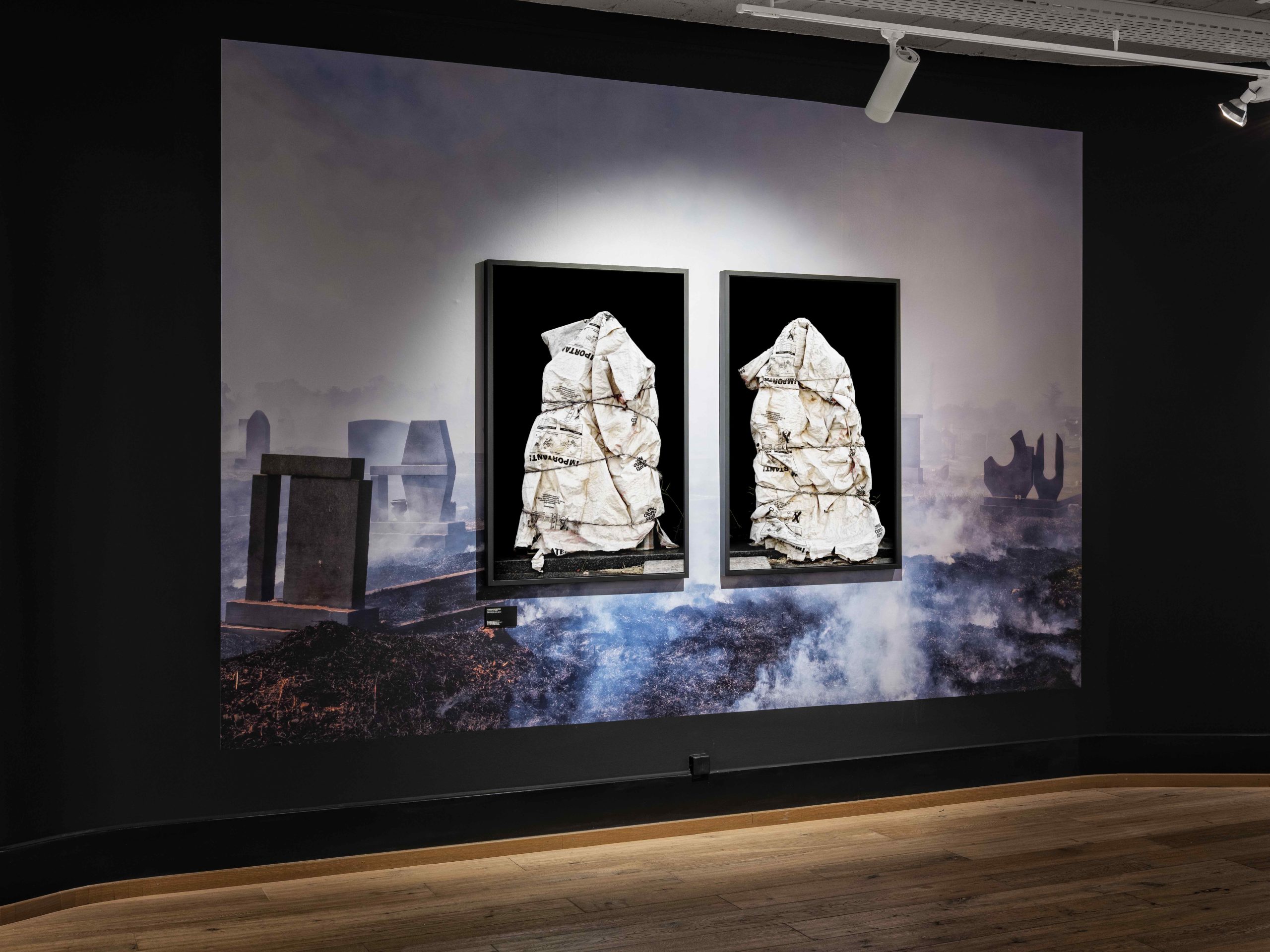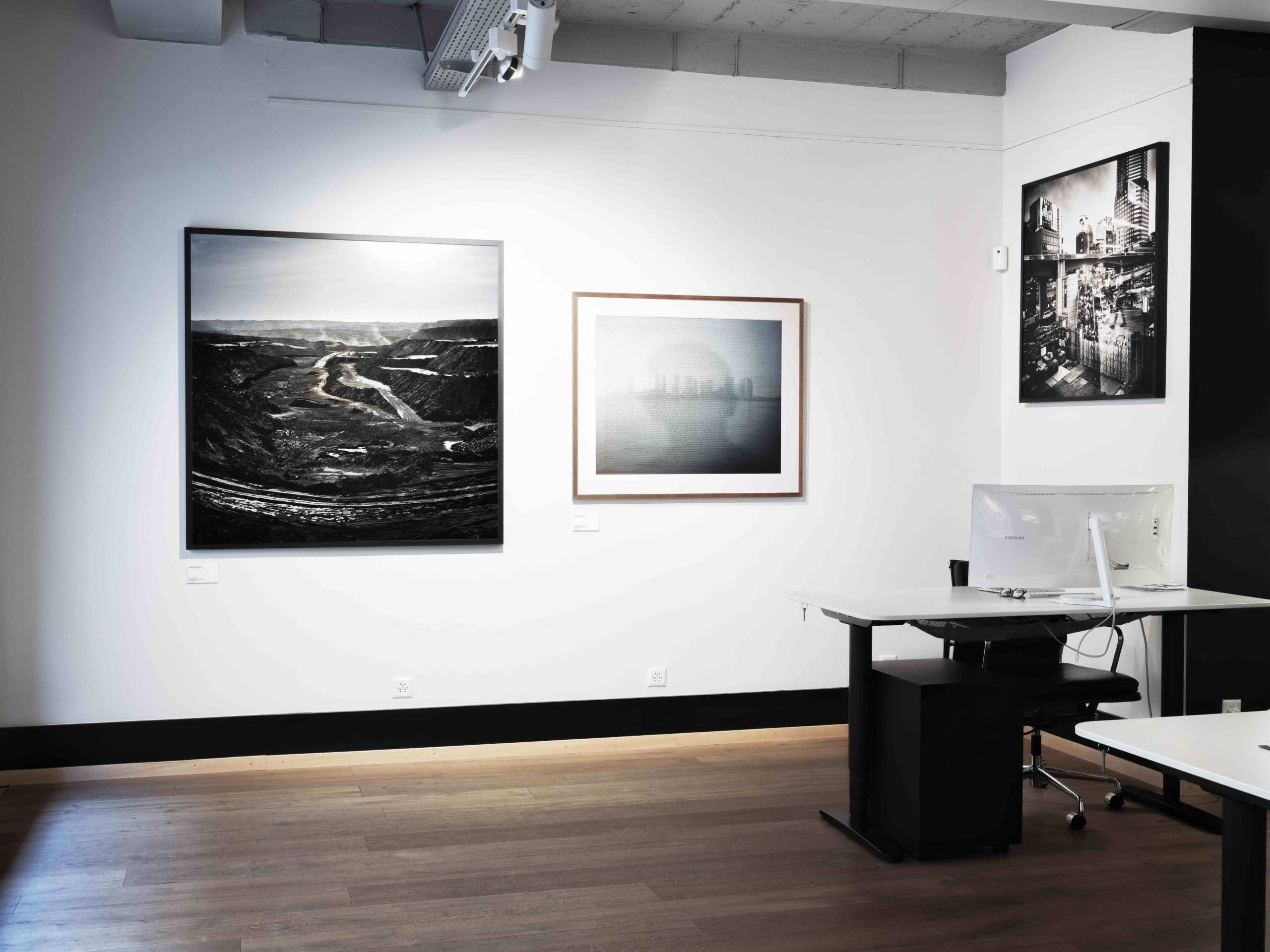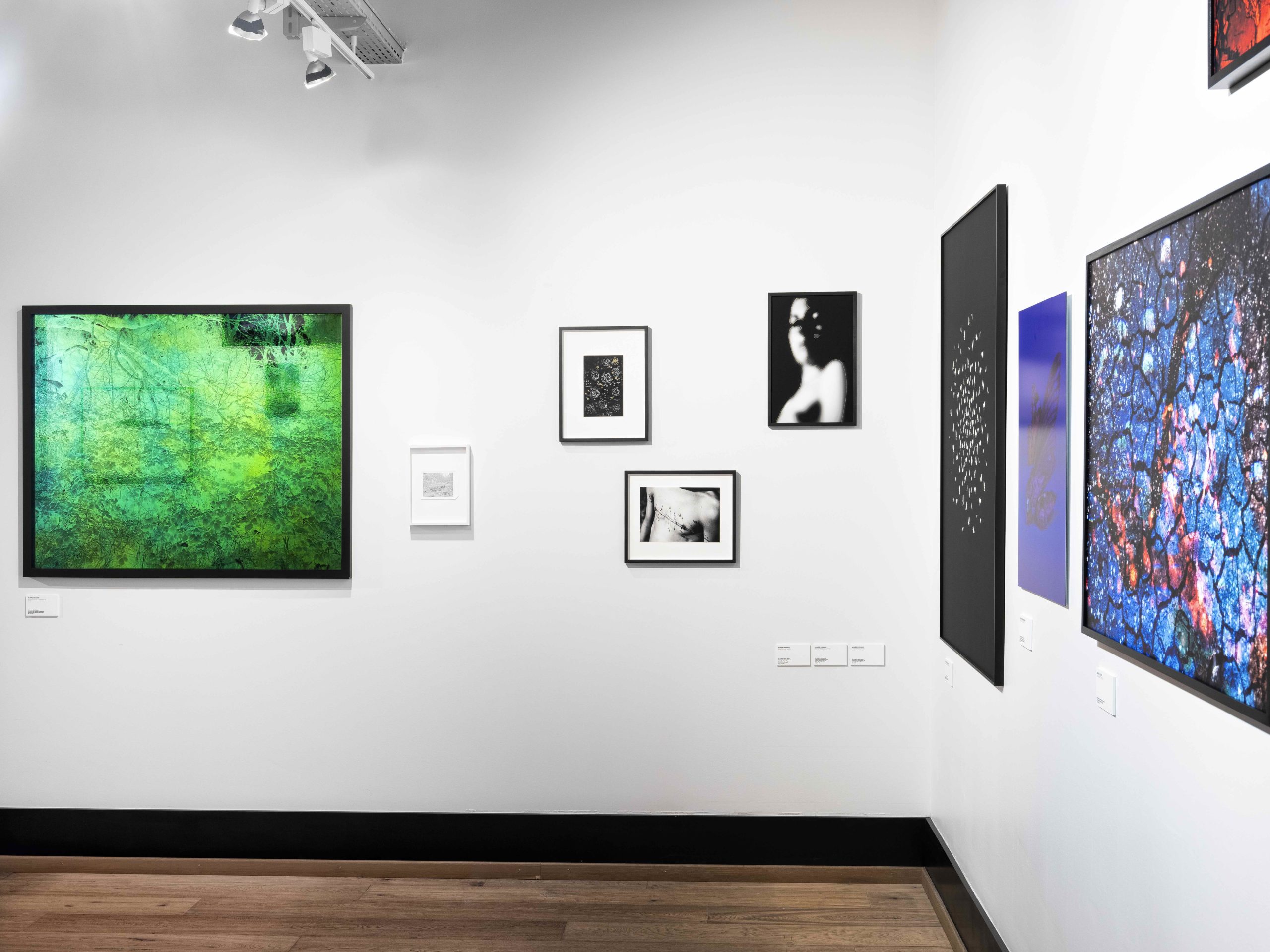
Entre chien et loup désigne ce moment crépusculaire où la lumière ne permet plus de distinguer le familier de l’étrange, le chien de la bête sauvage. C’est l’heure où le monde ordinaire bascule dans un autre possible, à la croisée du mythe et du rêve.
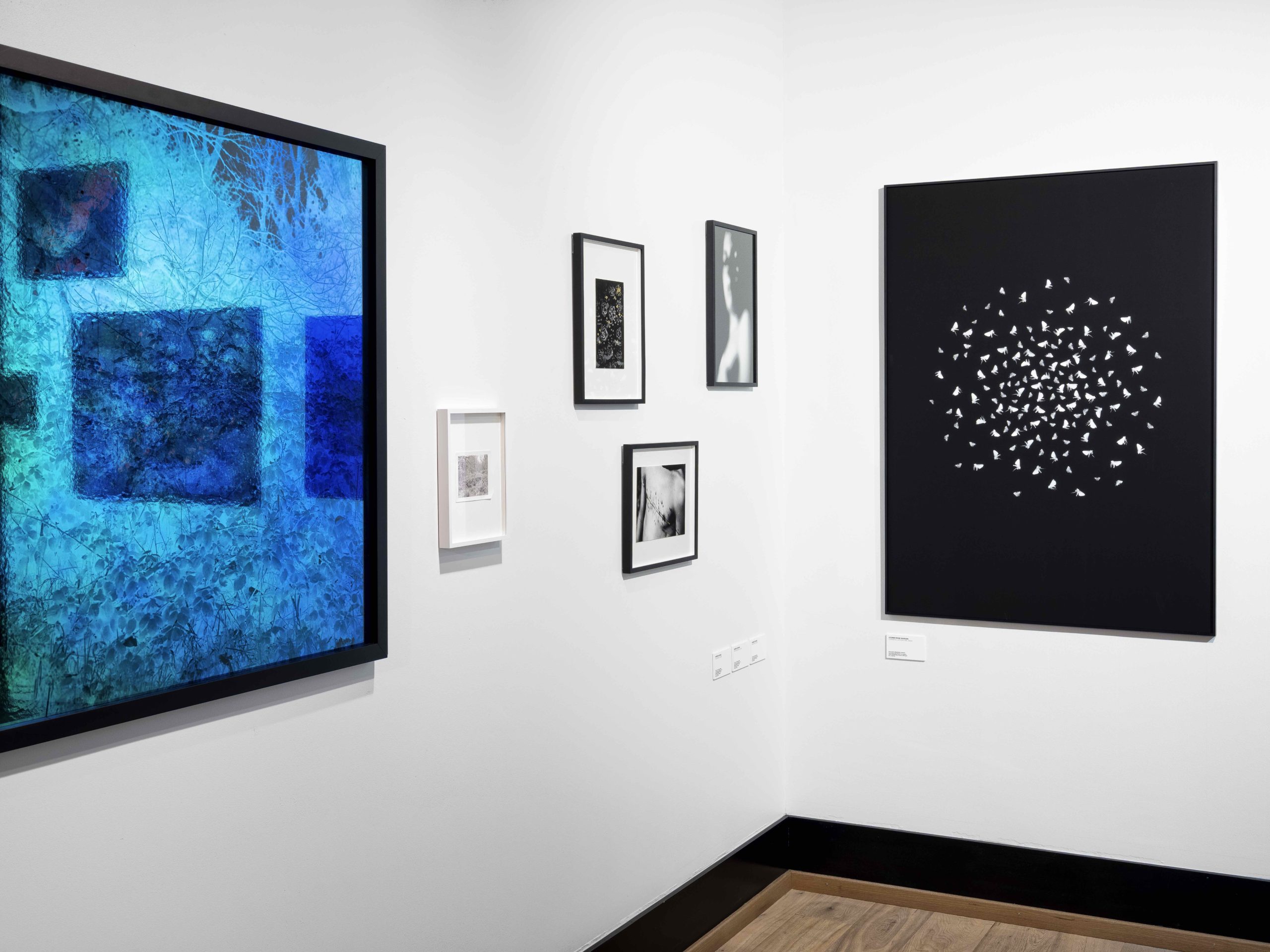
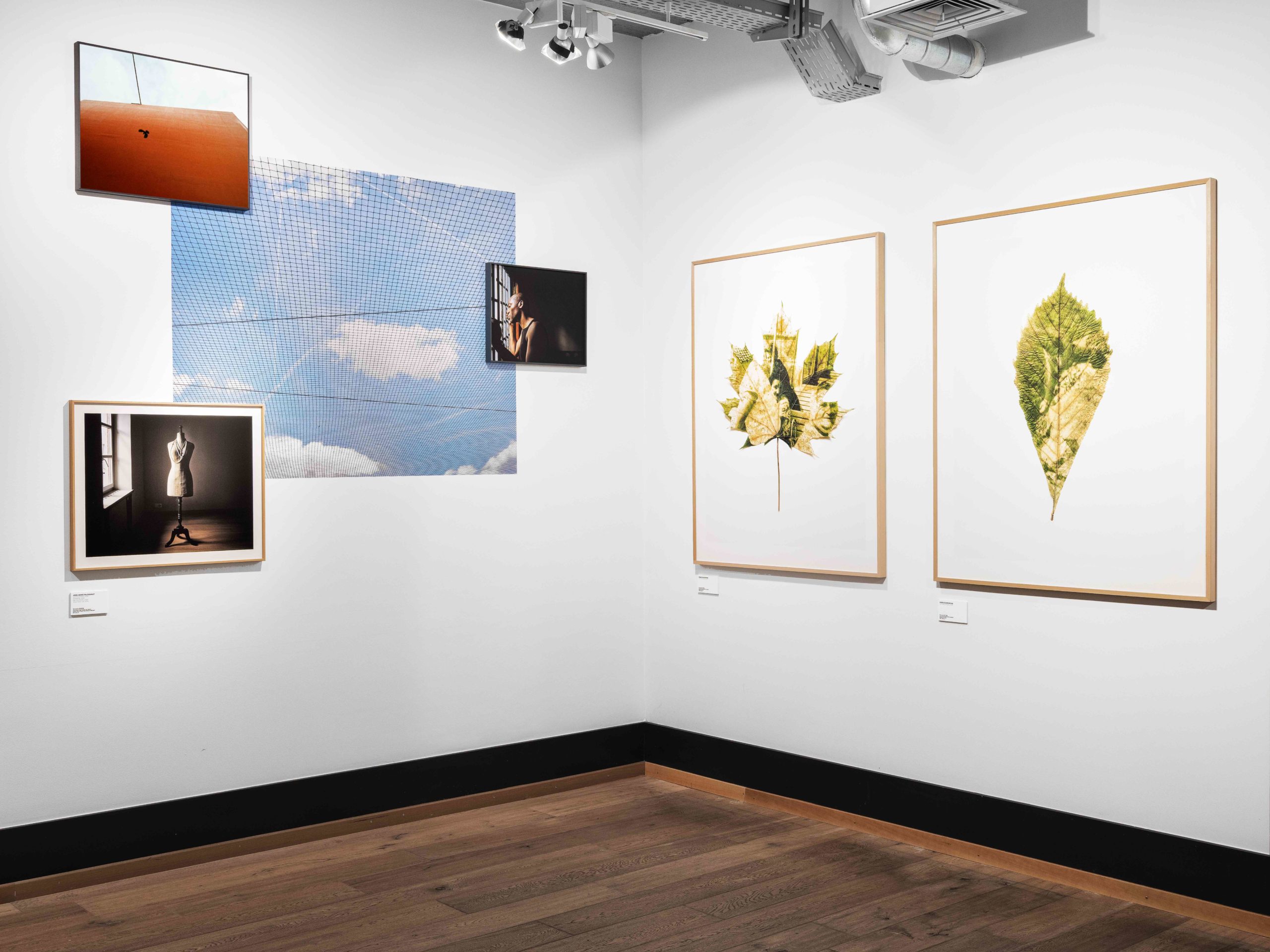
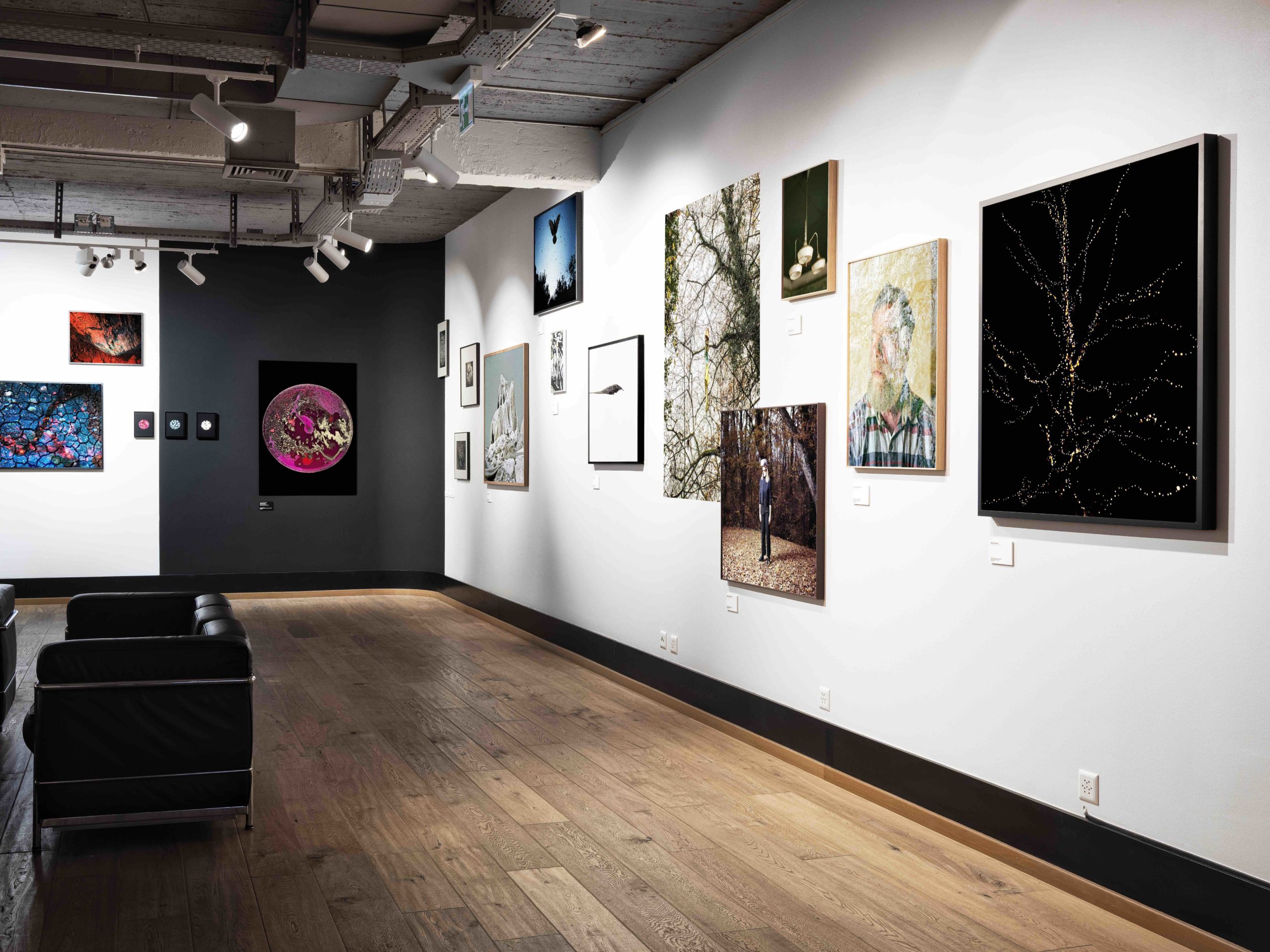
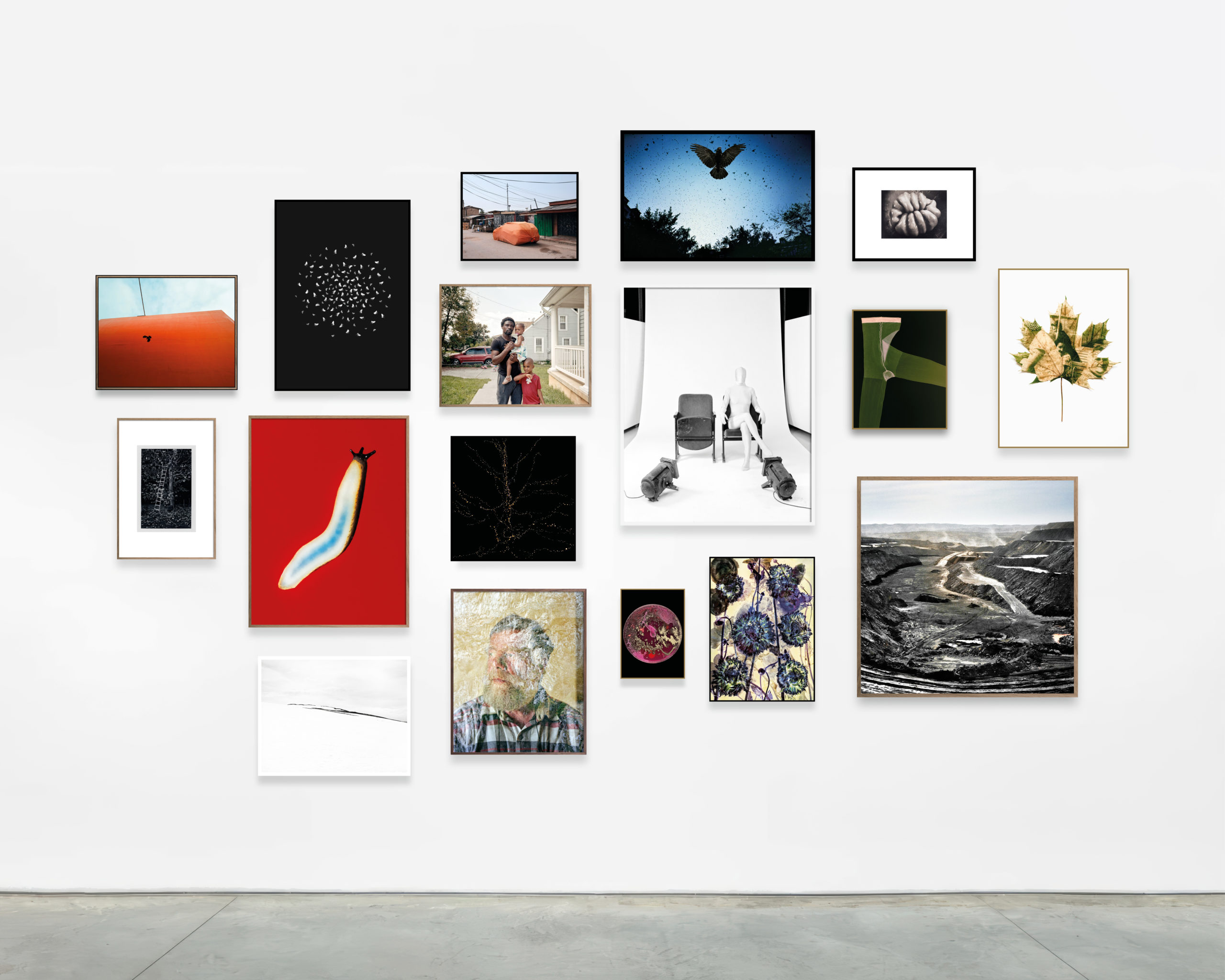
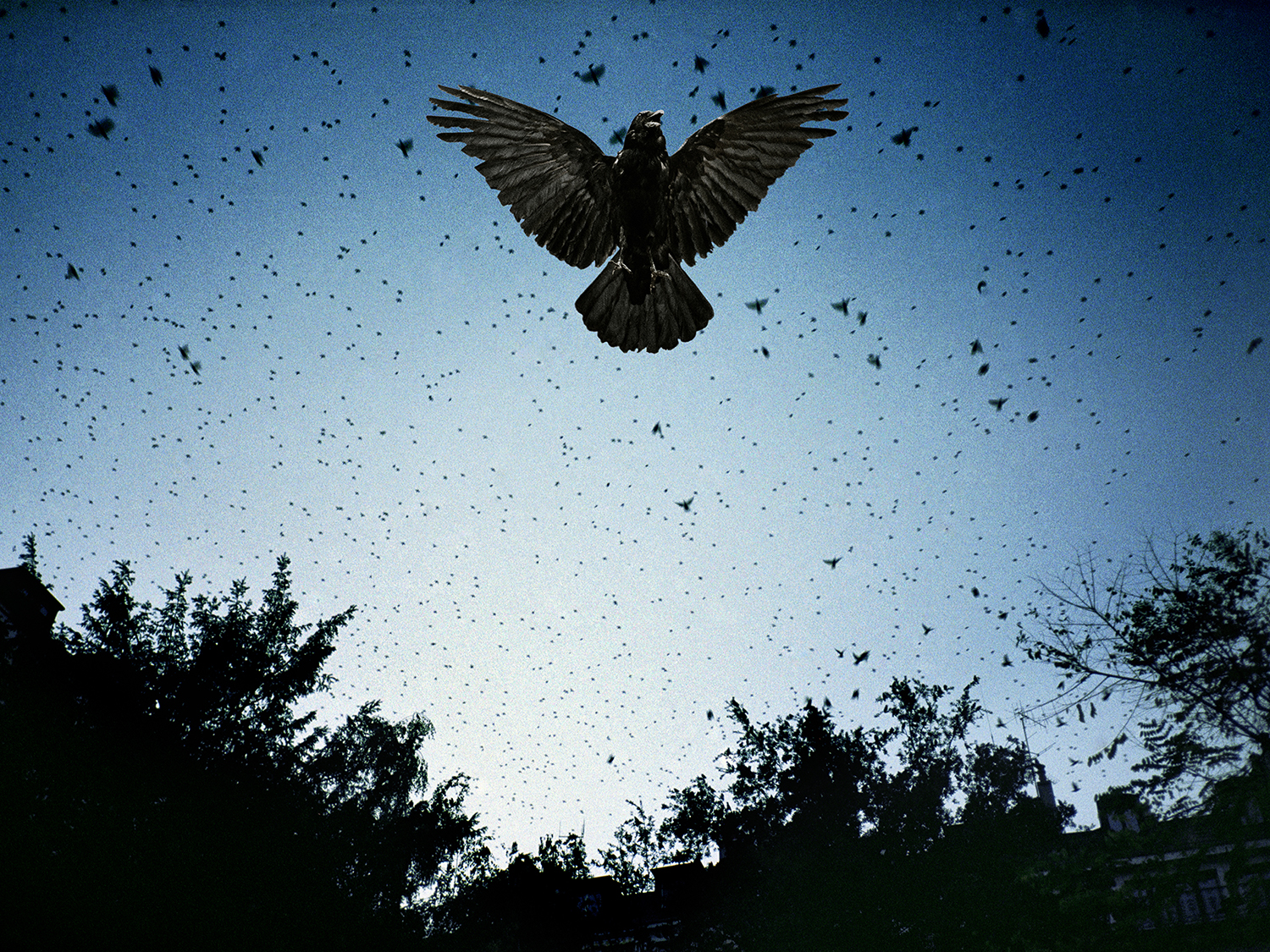
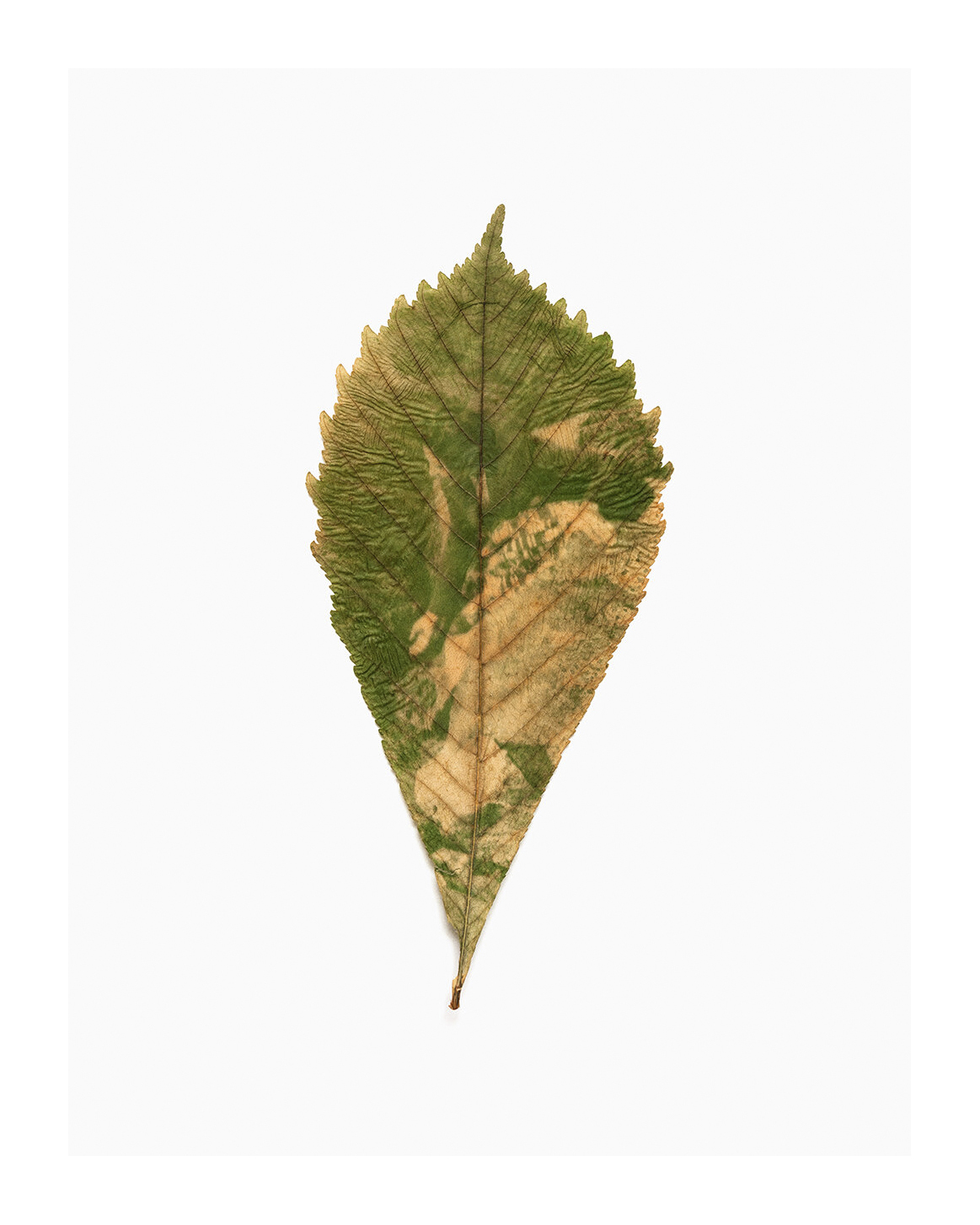
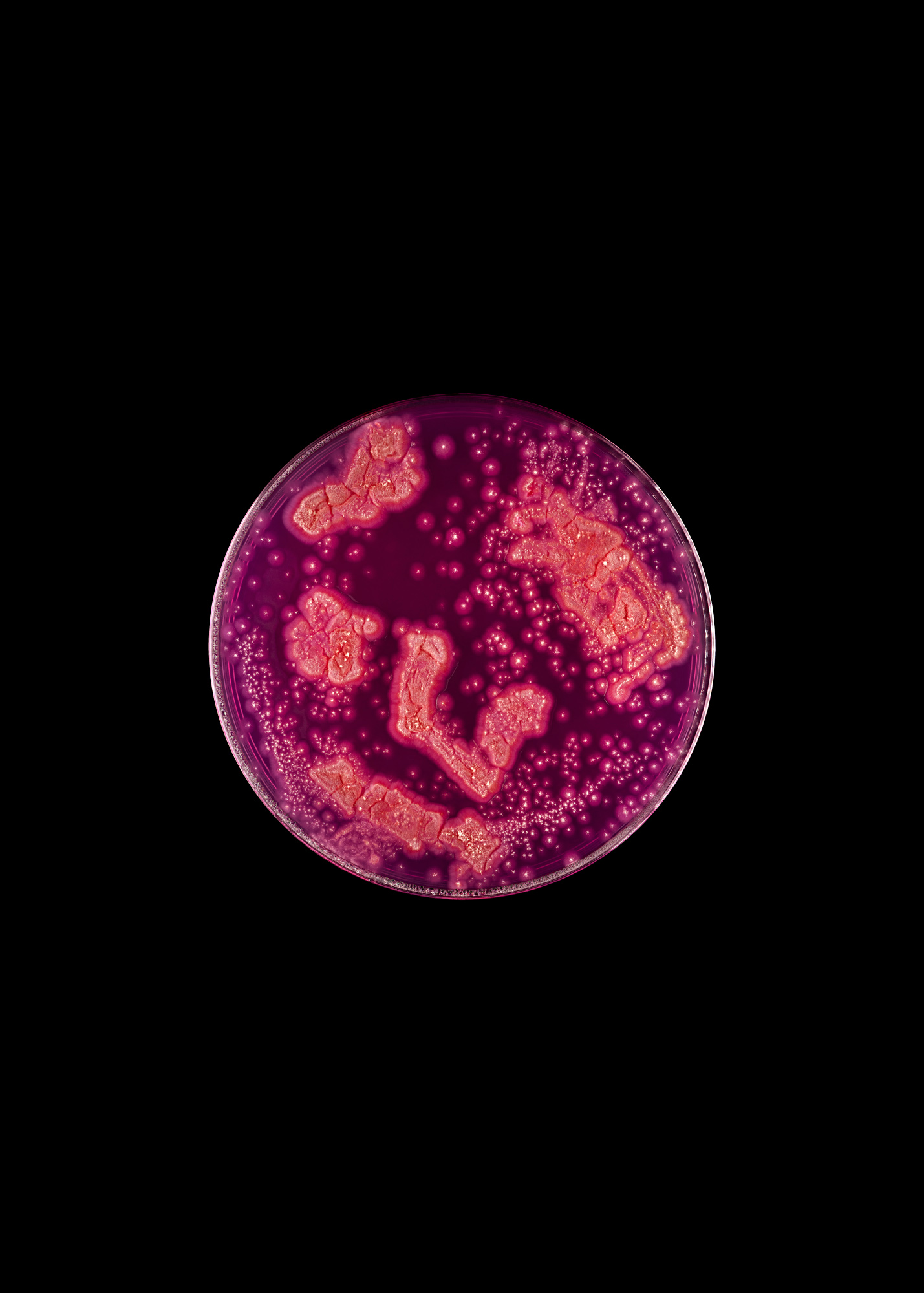
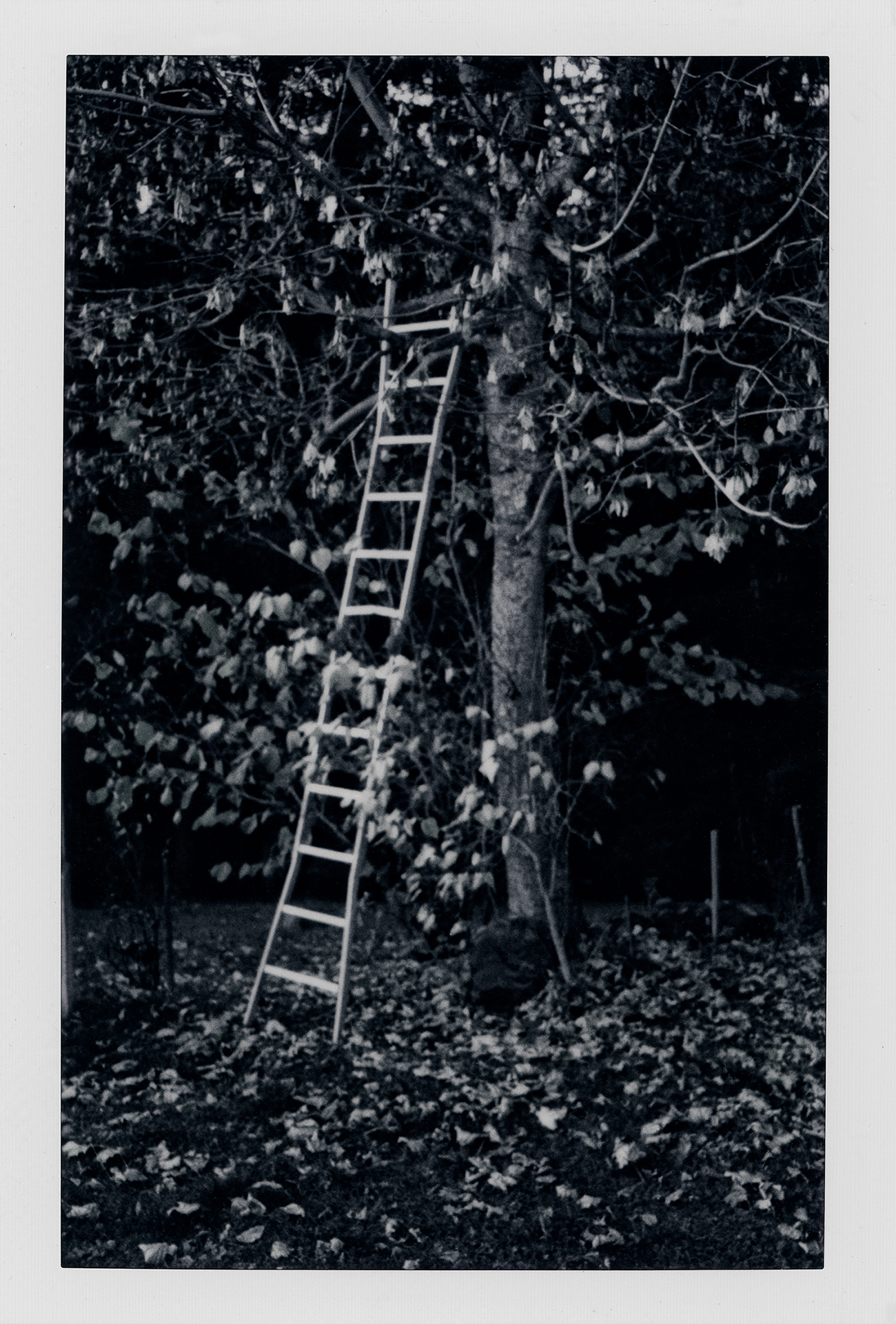
Une échelle contre un arbre devient promesse de montée vers la nuit, vers les songes, vers un monde parallèle. Une mémoire païenne resurgit, où corneilles, fauves et présages traversent un héritage spirituel. La saturation des couleurs fait basculer la nature dans un paradis évanescent. Sous la lueur des jours blancs, les pistes de ski deviennent un conte surréaliste. Le noir et blanc transforme la matière brute du paysage du Chasseral en nature originelle. Des micro-organismes endormis depuis la préhistoire reprennent forme et couleur. Dans une arrière-cour américaine, un combat ritualisé tente la civilité dans l’incivilité ambiante. Une vue urbaine à l’aube se voile sous l’écriture manuscrite Des feuilles d’arbre développées par photosynthèse portent les visages d’une autre époque, comme si la mémoire d’une génération ressurgissait à travers la matière.
Le réel est plus vaste que ce qu’on en voit. La photographie, quand elle est tenue par une écriture d’auteur, n’est pas seulement un dispositif d’enregistrement. Elle est aussi le révélateur de nos songes.